
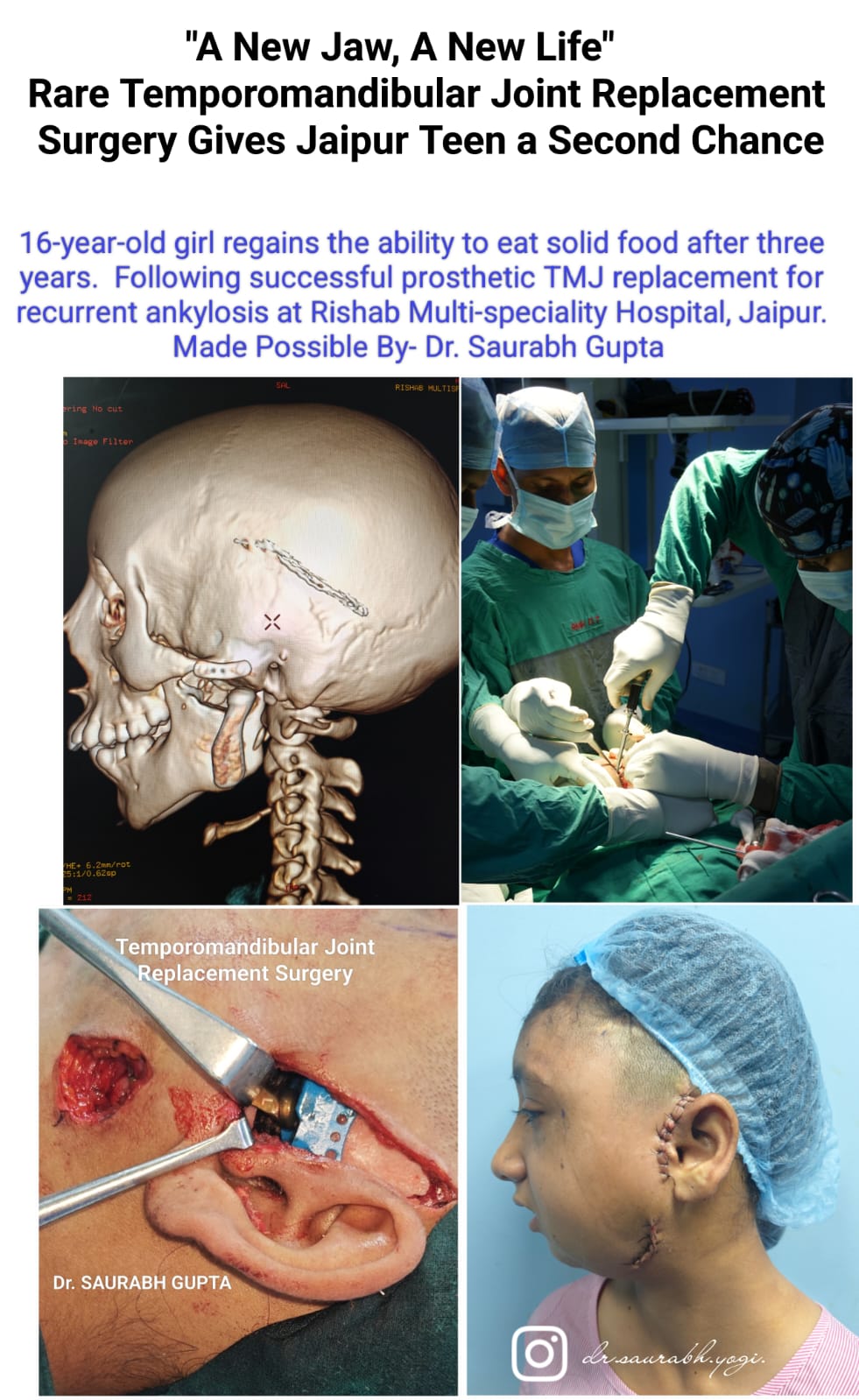
End-stage temporomandibular joint (TMJ) disorders, severe ankylosis, or destructive joint disease can cause severe pain, limited mouth opening, and impaired chewing or speech. Total joint replacement aims to restore joint function, alleviate chronic pain, and reconstruct stable jaw anatomy through careful multidisciplinary planning and precise surgical execution.
Treatment planning relies on detailed 3D CT imaging, virtual surgical planning (VSP), and thorough clinical evaluation. The primary goal is to safely resect diseased or fused joint tissue, maintain airway safety, and insert custom or stock prosthetic joint components that match the patient’s unique skeletal anatomy.
Surgical options include custom patient-specific CAD/CAM total joint prostheses or stock joint replacement systems consisting of a fossa component and a mandibular ramus component. In select cases, autogenous options such as costochondral (rib) grafts may be considered. Choice depends on anatomical defect, age, previous surgeries, bone quality, and inflammatory disease activity.
Total TMJ replacement is indicated when conservative measures, arthroscopy, or joint-preserving surgeries have failed or are unsuitable due to extensive joint destruction, bony fusion, or severe anatomical distortion.
Postoperative care requires structured physical therapy to restore range of motion, jaw opening, and bite alignment. Routine clinical and radiological monitoring is performed to assess implant stability, soft-tissue healing, nerve recovery, and long-term joint function.
copyright © 2026, All rights reserved | Dr Saurabh Gupta